Small Business Saturday Ideas for Michigan Communities
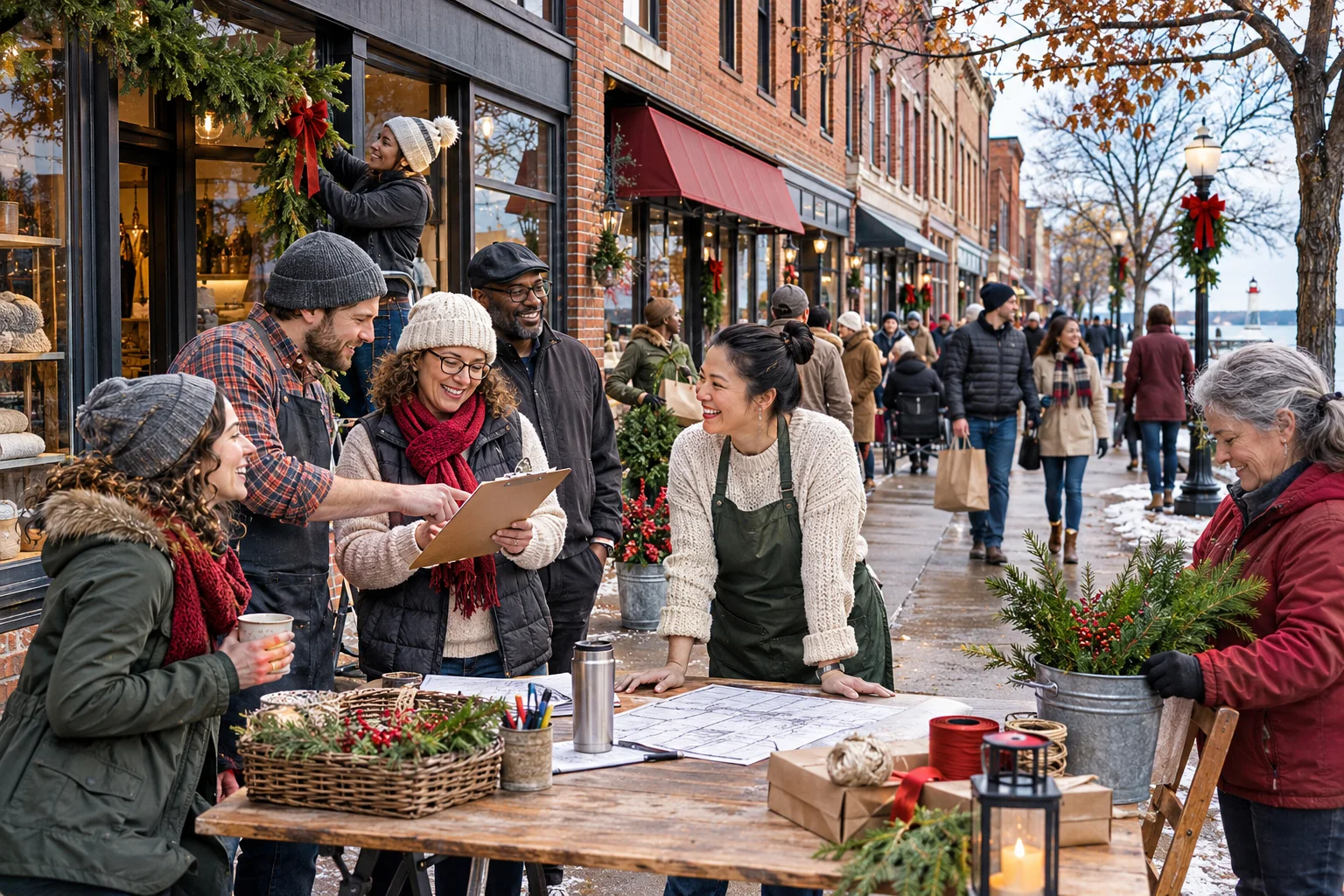
Small Business Saturday takes place on November 28 in 2026. Across Michigan, it is an opportunity to do more than encourage individual purchases. A coordinated event can introduce residents to businesses they have not visited, strengthen downtown and neighborhood identity, and give people a reason to return throughout the holiday season.
The best community campaigns make participation easy for businesses and discovery enjoyable for customers. They connect retail, restaurants, professional services, makers, nonprofits, and local media around one recognizable plan.
Here are practical ideas Michigan communities can adapt to their size, geography, weather, and business mix.
Create one community map
Build a simple mobile-friendly map showing participating businesses, hours, categories, accessibility information, parking, and any event activities. Include businesses outside the main retail block when they are part of the community.
Keep the map useful after November 28. A directory that remains accurate can support holiday shopping, dining, services, and future events. Assign one organization to collect changes and remove outdated information.
Printed versions can help customers who prefer a physical guide, but they should direct people to the online version for current hours and availability.
Organize a local shopping passport
A passport encourages customers to visit several participating locations without requiring every stop to involve a purchase. Businesses can offer a stamp for visiting, completing a small activity, or making an eligible purchase, depending on local rules and event goals.
Keep participation straightforward. Explain how many stops are required, where completed passports go, when the activity closes, and how any prize drawing works. Review applicable rules before promoting a contest or sweepstakes.
Use a mix of business types so the route does not feel like a list of similar stores. Restaurants, cafes, service providers, studios, and community organizations can all add variety.
Build neighborhood gift guides
Create gift guides around real customer needs rather than broad price categories alone. Examples include:
- Michigan-made gifts
- Gifts for outdoor enthusiasts
- Experiences and classes
- Gifts that can be shipped
- Last-minute local pickup
- Gifts for teachers, hosts, coworkers, or new homeowners
- Gift cards from restaurants and service businesses
Ask each participant to submit one or two strong ideas with current photography, price information, availability, and ordering details. A focused guide is easier to browse than a catalog containing every product in town.
Feature makers and businesses from across the region
Not every Michigan small business has a downtown storefront. Invite home-based businesses, regional makers, food producers, artists, and mobile vendors into a temporary market or hosted pop-up when space, permits, and event capacity allow.
Pair vendors thoughtfully with existing businesses. A maker inside a complementary shop can introduce both audiences to something new without drawing activity away from established locations.
Community organizers can also explore Michigan's MI Community Marketplace, a state resource designed to connect Michigan businesses with buyers and other organizations.
Spotlight veteran-owned and community-serving businesses
November is a natural time to recognize veteran entrepreneurs, but the spotlight should be specific and respectful. Share the business, its work, and its connection to the community rather than relying on a generic patriotic message.
Communities can also highlight businesses supporting food programs, schools, youth activities, shelters, arts organizations, and other local needs. Explain what the partnership accomplishes and how customers can participate.
Obtain permission before telling personal stories or identifying beneficiaries. Community support should be represented accurately and with dignity.
Coordinate a radio and digital campaign
Individual businesses may not have the resources to build broad awareness alone. A chamber, downtown organization, or participating group can coordinate a shared campaign that promotes the destination while businesses promote their specific offers.
Radio advertising can make the event date, community name, and reason to visit familiar across the surrounding area. Interviews or short business stories can add local voices when the format and station allow them.
Programmatic advertising can reinforce the campaign with maps, schedules, and direct links. Geographic targeting should reflect how far people will realistically travel. Use consistent colors, dates, names, and landing pages so every message belongs to the same event.
Plan for Michigan weather
Late November can bring cold temperatures, rain, wind, or snow depending on the region. Weather planning is part of customer service.
Publish parking and walking information. Identify accessible routes and indoor warming locations. Give outdoor vendors secure setups and a clear weather policy. Decide how schedule changes will be communicated across the website, social channels, local media, and participating businesses.
Do not wait for difficult weather to explain the plan. Customers and vendors should know where current information will appear.
Make downtown pickup easier
Holiday convenience can help local businesses compete. Communities can designate short-term pickup areas, publish parking options, coordinate local delivery, or create a single information point for customers navigating several orders.
Each participating business should state its own ordering deadline and pickup process clearly. A shared campaign should not imply that every location offers the same service.
Simple logistical improvements can matter as much as another discount, especially for families, older residents, and customers moving between several stops.
Give restaurants and service businesses a clear role
Small Business Saturday is not limited to gift retailers. Restaurants can offer reservation windows, local menu features, or a convenient break during the shopping route. Salons, studios, fitness businesses, repair services, and professional firms can promote gift certificates, demonstrations, future appointments, or useful seasonal resources.
The community guide should make these options visible. A diverse event keeps people in the district longer and helps more businesses participate without forcing every organization into the same promotion.
Create a community media kit
Prepare a shared folder containing approved event graphics, dates, descriptions, links, participating-business instructions, and sample messages. Give businesses room to add their own voice while keeping essential information consistent.
Include image sizes for websites, email, and common social platforms. Provide an accessibility reminder for alternative text and readable contrast. Identify whom businesses should contact when information changes.
The U.S. Small Business Administration also provides Small Business Saturday information and promotional resources for businesses and partner organizations.
Connect businesses to Michigan support resources
The event can become an entry point to longer-term business assistance. Michigan's current Small Business Support Hub finder helps entrepreneurs locate regional organizations offering resources and support.
Organizers can invite a regional support organization to provide information before or after the event. Keep the shopping day focused on customers, then offer separate opportunities for owners who want training, connections, or business-development help.
Measure community results
Choose measures that participating businesses can report without exposing private information. These might include estimated visits, map views, passport participation, offer redemption, new customers, event-page traffic, calls, or business feedback.
Ask what customers found confusing and which activities encouraged them to explore. Record weather, parking, staffing, and communication issues while they are still fresh.
Share a short summary with participants and begin next year's planning with the lessons. A community campaign becomes stronger when each year adds better coordination rather than starting from zero.
Continue the campaign beyond Saturday
Small Business Saturday should open the local holiday season, not end it. Keep the map and gift guides active, update availability, feature different businesses, and remind customers that local restaurants, services, and shops remain valuable throughout December and beyond.
Encourage participating businesses to give new customers a respectful next step, such as helpful email updates, a future event, or relevant January services. Our guide to turning holiday shoppers into loyal repeat customers provides a practical follow-up framework.
Communities can also use the Small Business Saturday marketing checklist to coordinate offers, websites, staffing, tracking, and customer experience at the individual-business level.
Make the community the reason to participate
The most effective Michigan campaigns do not treat local businesses as interchangeable stops. They show the people, products, services, and relationships that make the community distinctive.
A clear map, shared story, useful event plan, and coordinated media campaign can help residents discover more of what is already nearby. When the experience is well organized, Small Business Saturday becomes more than a promotion. It becomes an invitation to keep participating in the local economy.
If your Michigan community or business group needs help with radio, digital advertising, creative production, or a campaign landing page, talk with Crown Media Service.
Keep reading

Small Business Saturday Marketing Checklist for Local Businesses
Use this Small Business Saturday marketing checklist to prepare your offer, advertising, website, local visibility, customer experience, and campaign tracking.
How Local Businesses Can Compete With National Brands During the Holidays
Local businesses do not need national budgets to compete during the holidays. Win attention through relevance, service, convenience, community trust, and coordinated local advertising.