Why Radio Advertising Still Works in a Digital World
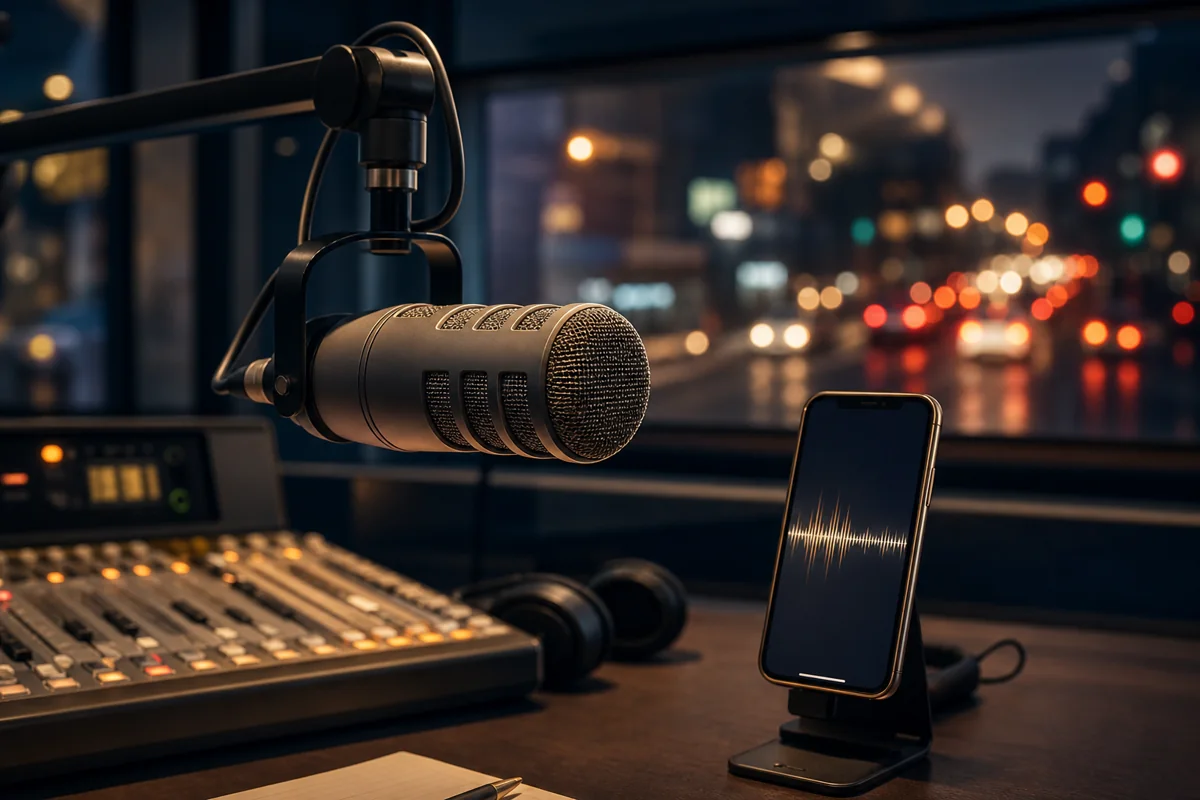
It's easy to assume that radio belongs to a previous era of marketing. The data says otherwise. Radio still reaches 93% of adults over 18 every single week — a larger weekly footprint than television or mobile video. For local businesses trying to be heard in their own community, that reach is hard to beat.
What makes radio endure is not nostalgia. It is the fact that audio fits into the parts of daily life where other media cannot reach — and it does so without asking the audience to stop what they are doing to receive the message. In an attention economy where every channel competes for the same locked-in screen time, radio travels alongside the listener and earns its place through repetition rather than interruption.
The 93% reach figure also deserves context. That number represents weekly exposure — the share of adults who tune in at least once during a normal week. For a local business, that means nearly every potential customer in the market is reachable through the channel, including the ones who never open a social app or read a local news site. Few other local media can claim anything close.
Radio meets people where they already are
Audio is the one medium that fits into the gaps of everyday life — the morning commute, the job site, the school run, the workout. Listeners don't have to stop what they're doing to receive your message. That makes radio uniquely effective at building familiarity and trust over time.
- Broad reach across every age group, including 18–34 and 35–49
- Local credibility through trusted stations and on-air personalities
- Cost efficiency compared to TV production and placement
- Frequency that keeps your brand top-of-mind
The secret is the message, not just the medium
A great radio campaign isn't only about buying airtime. It's about crafting a message that resonates. At Crown Media Service, every spot is professionally voiced and written to connect with the concerns and opportunities of your hometown.
The businesses that win on radio treat it as a relationship with the community, not a one-time announcement.
Pairing radio with digital
Radio works even harder when it's paired with digital. A listener hears your spot on their drive home, then sees a matching banner ad or social post that evening. That cross-channel reinforcement is where local brands see the biggest lift in recognition and action.
Frequency turns exposure into familiarity
One airing rarely changes behavior. Radio works through planned repetition: the audience hears the same central promise across different days and listening moments until the business name becomes familiar. A spot is easier to remember when it focuses on one audience, one benefit, and one next step.
The most common reason a radio campaign underperforms is not a weak message — it is not enough frequency for the message to register. A listener who hears a great spot once will usually forget it. A listener who hears a decent spot six times across two weeks is far more likely to act.
Local context gives the message weight
Local stations are part of the routines of the communities they serve. A well-placed message can reflect seasonal needs, nearby events, and the practical distance customers travel for a service. That local relevance can make a concise message feel more useful than a broad national claim.
Listeners also extend a kind of trust to the stations they choose day after day. The on-air personalities, the news, the music, and the community segments all build a relationship that an outside advertiser cannot easily replicate. When a local business shows up on that same station, with a message that fits the community, it benefits from the trust the listener already has in the dial itself.
Evaluate the whole customer path
Listeners may search later, visit directly, recognize a digital ad, or mention the business to someone else. Track branded searches, calls, direct traffic, offer response, and customer feedback alongside estimated reach and frequency. A campaign becomes more useful when the business knows what happened before, during, and after the flight.
Radio remains effective because it fits real life: it reaches people while they move, earns familiarity through repetition, and works alongside digital channels without asking the audience to change its routine.
When you are ready to turn that role into a practical media plan, explore Crown Media Service's radio advertising services, including strategy, professional production, placement, and measurement.
Keep reading

How Much Should a Local Business Spend on Radio and Digital Advertising?
Build a practical radio and digital advertising budget using your goals, customer value, market size, campaign length, and the results your business can measure.
How to Measure Radio Ad ROI — Reach, Frequency, and Impressions Explained
Wondering if radio advertising actually works for your business? Here's a plain-English guide to the metrics that matter — and how to track real return.