Blend Local Presence and Digital Visibility Into One Customer Experience

Local businesses often treat community marketing and digital marketing as separate worlds. One includes events, radio, sponsorships, referrals, and face-to-face relationships. The other includes search, websites, reviews, email, and online advertising.
Customers rarely separate them. They hear a name locally, search for it online, read reviews, check hours, and decide whether to visit. The experience succeeds when every step confirms the same business.
Begin with the local advantage
Local businesses can offer context national competitors may not have: knowledge of the area, relationships, responsiveness, and visible participation in community life. Identify which of these qualities customers actually value.
Avoid relying on location alone. Being nearby is useful; being nearby and clearly relevant is stronger.
Make the local advantage easy to see quickly. A storefront sign, a recognizable vehicle in the neighborhood, a consistent team at community events, or a familiar voice on local radio all reinforce that the business belongs. Familiarity is built through repetition, not through a single gesture, so choose a few visible commitments and keep them rather than spreading thin across many one-time appearances.
Make digital channels verify the story
After encountering the business offline, a customer should find an accurate website, current listing, clear services, useful reviews, and an obvious next step. Photos, staff information, local examples, and community involvement can make the online presence feel connected to the real organization.
Check that names, addresses, phone numbers, hours, and offers match everywhere. Inconsistency turns recognition into doubt.
Keep your business profile as current as your website. Update seasonal hours before they change, swap in recent photos a few times a year, and answer the common questions customers keep asking. That profile is often the first detailed view a searcher sees, and a stale one signals neglect faster than a plain website ever could.
Let offline activity create online content
Community events, partnerships, employee milestones, customer education, and local projects can provide meaningful digital material. Document them thoughtfully rather than staging activity solely for content.
One local event might produce an event page, reminder post, short video, photo recap, partner acknowledgment, and follow-up article. The material is useful because it reflects something real.
Reuse each piece thoughtfully. A short recap video can be cut into clips for different channels. A customer quote from an event can anchor a future email. A photograph can serve as a listing image, a newsletter header, and a social post in turn. One genuine moment, three different uses, three chances for a customer to recognize you.
Let digital insight improve local activity
Online questions and search patterns reveal what people need. A popular article might become a workshop topic. Frequent service searches can shape a radio message. Customer locations can inform event partnerships or media geography.
Digital data should not replace local judgment, but it can challenge assumptions and reveal opportunities.
Share what you learn across the team. A front-desk employee who knows which services are asked about most, paired with search data showing the same trend, is more persuasive in person than either signal alone. When the people answering the phone understand what customers are looking for, the line between marketing and service begins to disappear — and the experience becomes more consistent from first impression to final follow-up.
Give channels different jobs
A practical local-and-digital sequence might look like this:
- Radio or community presence introduces the name.
- Search and listings confirm the business is legitimate and accessible.
- The website explains the offer and answers questions.
- Reviews reduce uncertainty.
- Email or retargeting provides a timely reminder.
- The in-person or service experience delivers the promise.
Not every business needs every step, but each active channel should have a reason to exist.
If resources are tight, prioritize the steps customers actually use to decide. A small service business may gain more from accurate listings, a current website, and a handful of recent reviews than from paid retargeting it cannot sustain. Choosing fewer channels, each with a clear purpose, usually outperforms spreading effort across many without follow-through.
Use a shared campaign foundation
Create one campaign brief with the audience, central message, offer, dates, visual cues, and tracking plan. Adapt the execution to each channel without changing the facts.
A radio spot needs sound and repetition. A display ad needs instant visual recognition. A landing page needs detail. Employees need a simple explanation they can repeat. Shared foundations prevent these pieces from drifting apart.
Write the brief down rather than holding it in conversation. A one-page document with the audience, the offer, the dates, and the tone gives every channel owner the same reference point. When someone asks why the radio copy differs from the website headline, the brief answers the question before it slows the campaign.
Measure the combined path
Ask customers how they heard about the business, but expect more than one answer. Review direct traffic, branded searches, calls, direction requests, bookings, offer use, and foot traffic together.
The final click may not represent the first influence. A local sponsorship can create familiarity; a search result can confirm it; a review can complete the decision.
Track a small set of signals consistently rather than a long list sporadically. A handful of metrics reviewed every month — branded searches, calls, bookings, and offer redemptions — will reveal trends that a sprawling dashboard reviewed twice a year cannot. Consistency turns measurement into a habit, and habits compound.
Audit the experience from the outside
Once a quarter, follow the path yourself. Hear or view the campaign, search the business, open the website on a phone, call the number, check directions, and visit the location. Note every point where information is missing or the tone changes.
Local presence creates human connection. Digital visibility makes that connection easier to discover and act upon. The strongest strategy does not choose between them; it removes the seams between them.
Keep reading
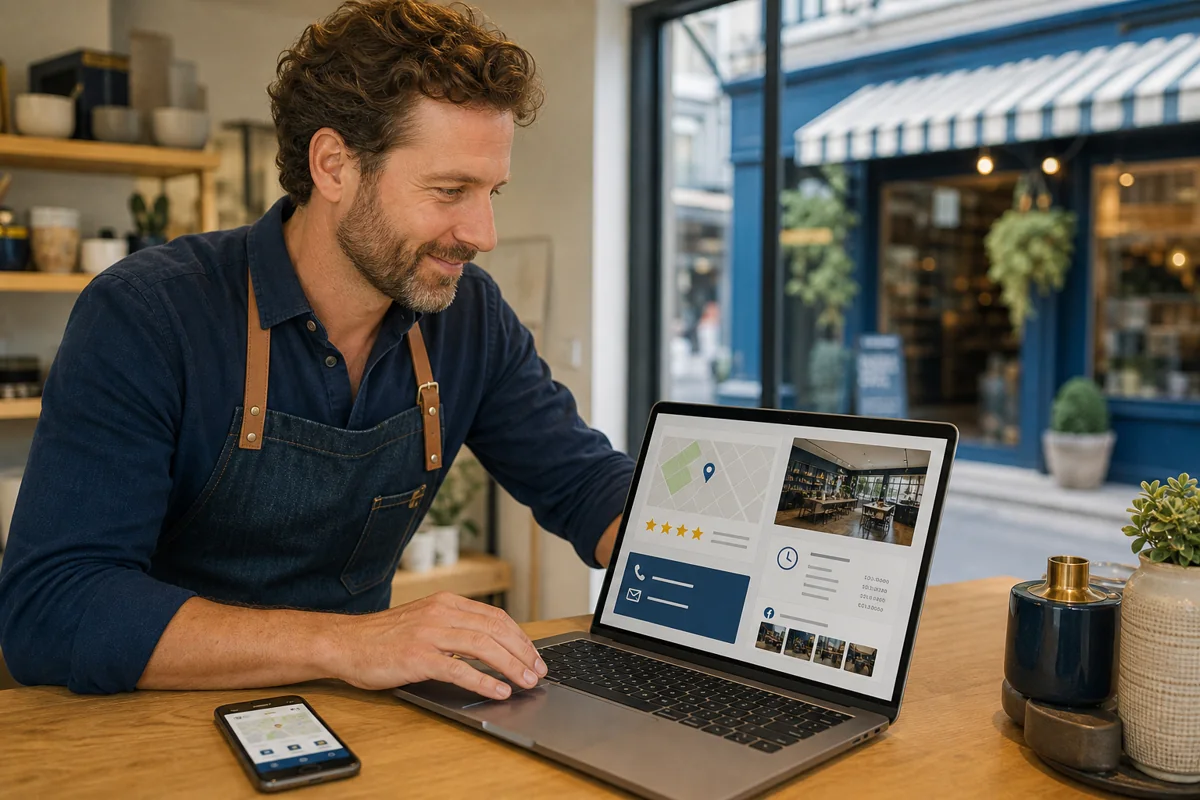
Marketing Tip: Give Your New Business a Strong Start With Google Business Profile
A complete Google Business Profile can help a new business appear clearly on Google Search and Maps, build trust, and turn local searches into calls, visits, and inquiries.

What Is the 3-3-3 Rule in Marketing?
Use three seconds, three core messages, and three coordinated touchpoints to make a campaign easier to notice, understand, and remember.