Make Sure People Can Find and Understand Your Business Online
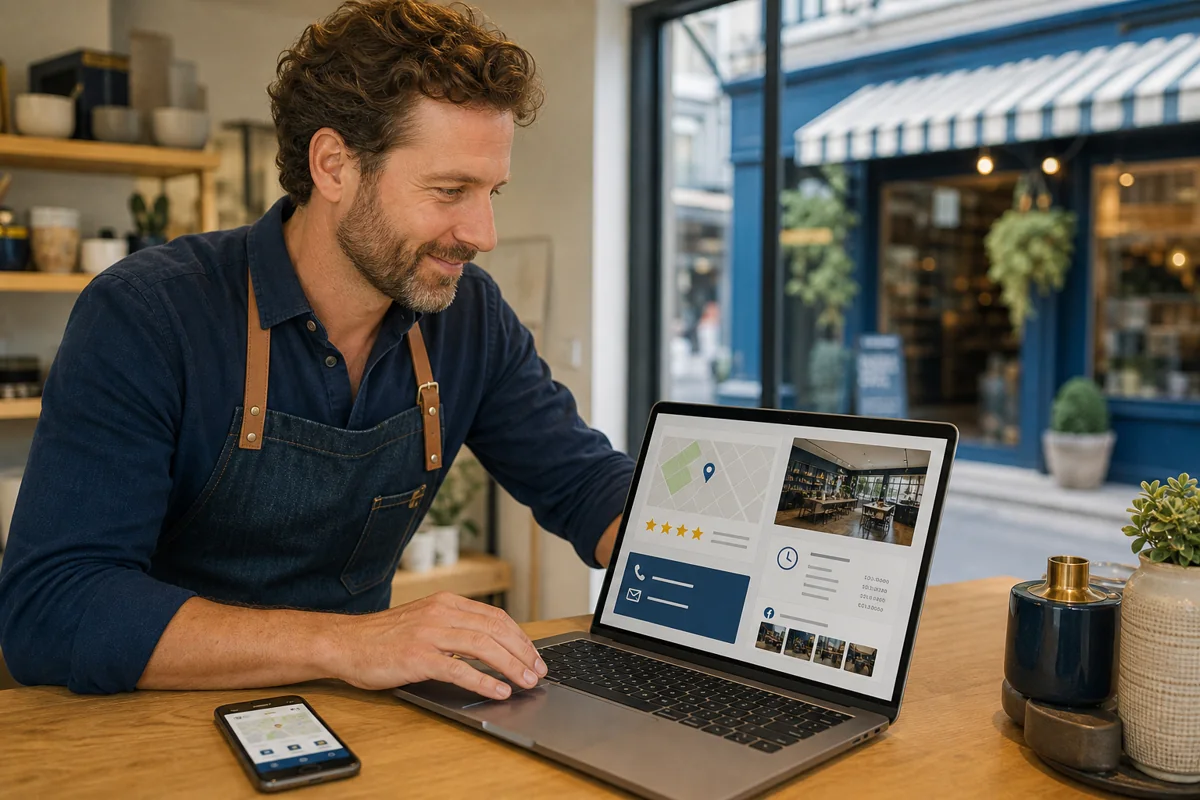
Advertising creates interest, but interest is easily lost when customers cannot find accurate information. A strong digital presence does not need to be complicated. It needs to be consistent, current, and useful.
For most local businesses, being findable matters more than being clever. A customer who hears the name on the radio, searches for it, and lands on a clear, accurate page is already most of the way to a decision. A customer who lands on a broken link or an outdated phone number is lost before the business ever has a chance.
Check the essential information
Search for the business the way a new customer would. Confirm the name, address, phone number, hours, service area, and website across major listings and social profiles. Look for old locations, duplicate pages, outdated holiday hours, and broken links.
Small inconsistencies create doubt. They also make it harder for search systems to understand which information is reliable.
Treat your business profile as a first-class marketing asset, not a set-and-forget listing. Add photos, keep services and categories current, post occasional updates, and answer the questions the platform suggests. A complete, active profile signals that the business is operating — and it often appears above organic results for local searches.
Make the website answer basic questions
A visitor should quickly learn:
- What the business offers
- Who it serves
- Where it operates
- When it is open
- How to call, visit, book, or request information
Put these answers where mobile visitors can find them without zooming or opening several menus. Test forms and phone links on an actual phone.
The first five seconds of a visit usually decide whether the visitor stays. If the most important answers require scrolling past a hero image, a video, or several paragraphs of introduction, many visitors will leave before they find them. Lead with the information, then support it with context.
Use customer language
Customers may search for a problem rather than a formal service name. Review the words used in calls, emails, and reviews, then reflect that language naturally in page headings and descriptions. Clear writing helps people and search engines understand the page.
A simple exercise: list the ten phrases customers actually use to describe what they need, then check whether those phrases appear on the relevant pages. Industry terms have their place, but a page written entirely in internal vocabulary will miss the people searching in everyday language.
The same principle applies to location. Customers often search with a city, neighborhood, or "near me" qualifier. Pages that name the actual communities and regions the business serves will surface for those searches; pages that describe the service area only in generic terms will not.
Keep listings consistent across platforms
Name, address, and phone number should match exactly across the website, the business profile, directories, social accounts, and anywhere else the business appears. Even small differences — a suite number formatted one way here and another way there — can erode confidence and create confusion in local search results.
If the business has moved, changed its phone number, or rebranded, update every listing rather than just the most visible one. Old information on a minor directory can still send a customer to the wrong door or a dead line.
Keep profiles active, not noisy
Regular updates signal that the business is operating. Share changes in hours, useful seasonal information, completed work, common questions, and community involvement. Every post does not need to be promotional.
Aim for a rhythm the business can maintain. A photo and a short update every week or two is usually enough to show the profile is alive; a burst of daily posts followed by months of silence sends the opposite signal.
Make the site work on a phone
Most local searches happen on mobile, often while the customer is out and about. A site that looks polished on a desktop but is slow, cramped, or hard to tap on a phone is losing customers who were ready to act.
Check the basics: does the phone number tap to call, does the address open in maps, does the booking form work on a small screen, do images load quickly on a cellular connection? Each of these is a small fix with an outsized effect on whether a visit turns into contact.
Speed is part of findability. A page that takes too long to load on a phone is, in practice, a page many visitors will never see. Compress large images, avoid heavy scripts where they are not needed, and check the site on a real cellular connection from time to time. A fast, plain page will usually outperform a slow, elaborate one.
Pay attention to reviews and questions
Reviews and the Q&A sections on listings are part of how people find and evaluate the business. A steady stream of recent reviews signals an active business; a long silence can read as inactivity. Questions left unanswered look like neglect.
Encourage reviews from satisfied customers as a normal part of closing the work, and respond to reviews — positive and negative — in a consistent voice. Answer public questions promptly, and use recurring questions as signals for what should be explained more clearly on the website itself.
Reviews also feed directly into how the business appears in local results. A listing with a healthy rating and recent activity tends to show up more prominently than one that has gone quiet. The same conversation that builds trust with future customers is also quietly improving where and how often the business is found.
Review the path after every campaign
When a radio spot or digital ad launches, search for the business again. Does the result match the campaign? Can a customer find the promoted offer? Are directions and hours correct? Marketing should lead to a destination that confirms the promise.
Treat the landing experience as part of the campaign, not as something separate. A great radio spot that sends listeners to a page with no mention of the offer wastes the impression. The campaign and the destination should describe the same business in the same words.
Check the experience from the outside, not just from the office. Listen to the spot, then immediately search for the business on a phone the way a listener would. The gap between what the campaign promised and what the search returns is the gap worth closing first.
Run a quarterly visibility check
A quarterly visibility check can prevent months of missed calls and confused customers. Being findable is not glamorous, but it is the foundation beneath every other marketing effort. Set a recurring reminder, walk through the same checklist each time, and fix what has drifted. Small corrections made four times a year will keep the foundation solid without becoming a major project.
Keep reading
Marketing Tip: Give Your New Business a Strong Start With Google Business Profile
A complete Google Business Profile can help a new business appear clearly on Google Search and Maps, build trust, and turn local searches into calls, visits, and inquiries.

What Is the 3-3-3 Rule in Marketing?
Use three seconds, three core messages, and three coordinated touchpoints to make a campaign easier to notice, understand, and remember.